Caffeine is the ultimate weapon in our productivity arsenal

Recently, I came across a subreddit called r/productivity, where people discuss various mechanisms and habits to boost their productivity. People on this subreddit evaluate and share their experiences with different substances, including nicotine, caffeine, etc. Many people on this subreddit share the opinion that drinking coffee is not that good because caffeine itself has many downsides. In this post, I will attempt to explain how caffeine specifically works in our bodies. First, let’s talk about caffeine.
"Caffeine is the ultimate weaponry in our productivity arsenal." -Me
I use caffeine daily. I think I cannot function without it, even though I never tried. Caffeine is probably the most potent legal substance that makes the world move. It is even argued (in some circles) that the development of our civilization depends on caffeine consumption. Caffeine is the most widely used central nervous system stimulant in the world. It is an alkaloid naturally found in more than 60 plants, including the fruit, leaves, and beans of coffee, cacao, and guarana plants.
It has numerous pharmacological and physiological effects, including cardiovascular, respiratory, renal, and smooth muscle effects, as well as effects on mood, memory, alertness, and physical and cognitive performance.
Caffeine affects several pathways:
1) Adenosine receptors
One of the most common reasons people consume caffeine is to increase their alertness. This effect is due to the competitive binding of caffeine to adenosine receptors. These are the receptors found in our brain that stimulate the feeling of sleepiness when adenosine binds to them.
To put it simply, we have two main pathways that affect our circadian rhythm:
The first is a more familiar melatonin pathway, in which a molecule called melatonin is released from your pineal gland in spikes and binds to different receptors that make us feel sleepy. The other, far less recognized pathway is the adenosine pathway. Unlike melatonin, adenosine is secreted slowly, and it accumulates as the day goes on. Once enough concentration of adenosine is present, more and more adenosine binds to its respective receptors, resulting in us feeling tired. Caffeine blocks the adenosine from binding to its receptors, making us feel more alert. There is a catch, however. Since caffeine doesn’t affect the concentration of adenosine in our brain, adenosine molecules continue to accumulate without binding to their receptors. Once caffeine is unbound from adenosine receptors, the accumulated adenosine quickly rushes to bind to all of its unoccupied receptors, resulting in a sudden crash of energy and the end of wakefulness.
2) Phosphodiesterase
The second pathway that is important to mention when talking about caffeine is the almost ubiquitous cAMP-phosphodiesterase pathway. It was proven that caffeine acts as a stimulant of a molecule called cyclic-AMP (cAMP), which consequently inhibits a phosphodiesterase enzyme in skeletal muscles and adipose tissue. In simpler terms, caffeine promotes the degradation of fat tissue while also protecting the muscle glycogen from being used up as energy. When we combine these effects with caffeine's suppressing effect, caffeine becomes a great tool to lose weight while maintaining muscle mass. This mechanism also partially explains the cardiostimulatory effect of caffeine (enhancement of heart function).
3) Calcium
It was observed that caffeine mobilizes intracellular calcium but can also interfere with the uptake and storage of calcium at higher concentrations. Calcium that is stored in our skeletal muscles is released when muscle contraction happens. Calcium ions then help the muscle contract. This means that caffeine can help certain muscle movements feel easier.
4) Benzodiazepine receptors
Perhaps the most insignificant caffeine effect is its antagonizing effect on benzodiazepine receptors. Although it was proven that caffeine can lower the effectiveness of benzodiazepines, recent studies confirmed that a much higher concentration of caffeine is needed in order to negate the effects of benzodiazepines.
Now that we know the pharmacodynamics of caffeine, let’s look at some research papers:
“The results from the first study showed that those who consumed higher levels of caffeine reported significantly greater increases in alertness over the working day and a significantly smaller slowing of reaction time... it was found that higher caffeine consumption was associated with about half the risk of frequent/very frequent cognitive failures and a similar reduction in risk for accidents at work.”
Another paper showed this:
“Many occupations, including military, first responders, transport workers, and factory shift workers, require optimal physical and cognitive function to ensure success, workplace safety, and productivity. In these circumstances, that may include restricted sleep, repeated administration of caffeine is an effective strategy to maintain physical and cognitive capabilities.”
All of these tell us that caffeine is a wonder drug. It gives us energy, makes us alert, and helps us move our bodies more efficiently. However, there are some downsides.
The four horsemen of the caffeine downsides
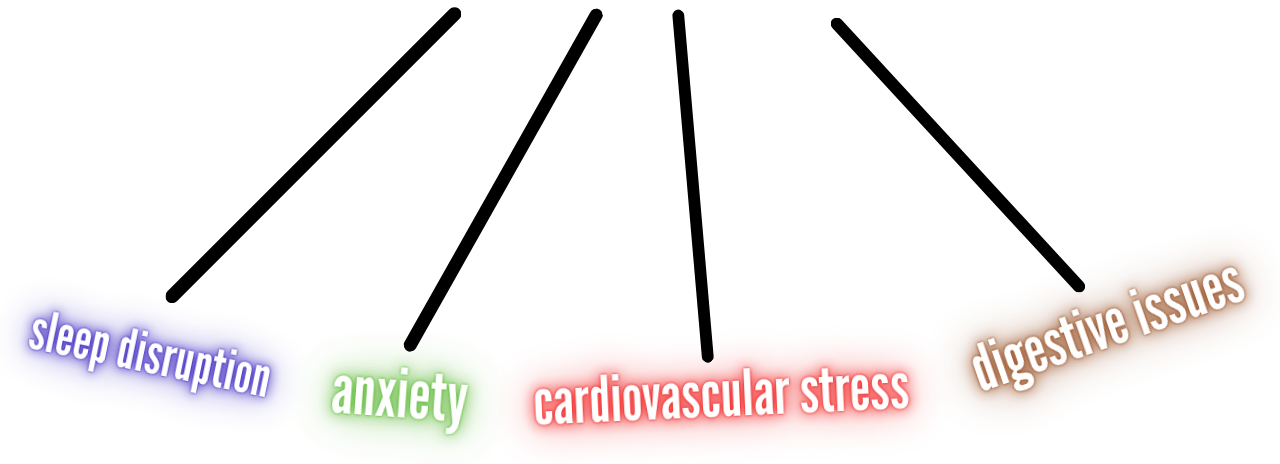
Caffeine can limit the amount of restorative sleep we get per night because its half-life is 3 to 7 hours. So if you want to consume caffeine, it would be best to limit it to the morning. In people suffering from anxiety disorders, caffeine can worsen the symptoms and even cause panic attacks. For this reason, it would be wise to limit the daily consumption or even quit caffeine entirely if possible. Caffeine can cause heart palpitations or an elevated heart rate in some people. It can also raise blood pressure temporarily, which might be concerning for people with hypertension. Caffeine can also disrupt the stomach lining and worsen the symptoms of GERD and/or acid reflux. However, anecdotally, people who quit caffeine usually relapse because of constipation and irregular bowel movement.
This doesn’t mean that caffeine is the best laxative, since people who stick to quitting caffeine report the return of their normal bathroom schedule after a few months.
Caffeine has its positive and negative sides, but for me, the positives far outweigh the negatives when I consume caffeine with at least a little bit of caution.
Summary:
I recently came across a subreddit called r/productivity where people discuss tools and habits to enhance productivity. A popular topic there is caffeine, with many users debating its pros and cons. I use caffeine daily and believe it plays a huge role in keeping me functional, so much so that it’s often called the most potent legal productivity enhancer. Some even argue that caffeine has fueled the progress of civilization itself.
Caffeine is the most widely used central nervous system stimulant, found in over 60 plants. It has various physiological effects, influencing alertness, memory, mood, heart and muscle function, and metabolism.
How Caffeine Works in the Body:
- Adenosine Receptors: Caffeine blocks adenosine receptors in the brain, preventing the buildup of sleepiness. However, once caffeine wears off, accumulated adenosine floods the receptors, causing a sudden energy crash.
- Phosphodiesterase Inhibition: Caffeine boosts the activity of cAMP, leading to fat breakdown and muscle glycogen preservation. This makes it useful for energy and weight loss, while also supporting heart function.
- Calcium Mobilization: It helps muscles contract more easily by increasing intracellular calcium availability, making physical tasks feel less strenuous.
- Benzodiazepine Receptors: While caffeine can interfere with these receptors, it takes a very high dose to significantly reduce the effects of benzodiazepines.
What Research Says:
Studies show that higher caffeine intake can increase alertness, improve reaction time, and reduce workplace cognitive failures and accidents. In high-demand jobs (like the military or shift work), caffeine can help maintain mental and physical performance, especially when sleep is limited.
The Downsides (The Four Horsemen):
- Sleep Disruption: Its long half-life can interfere with restorative sleep, so it's best to consume caffeine only in the morning.
- Anxiety: It can worsen anxiety and trigger panic attacks in sensitive individuals, so moderation or quitting might be necessary.
- Cardiovascular Effects: Caffeine can cause temporary increases in heart rate and blood pressure.
- Digestive Issues: It may irritate the stomach or worsen acid reflux, but stopping caffeine can initially cause constipation. This usually resolves after a few months.