
Something about Death

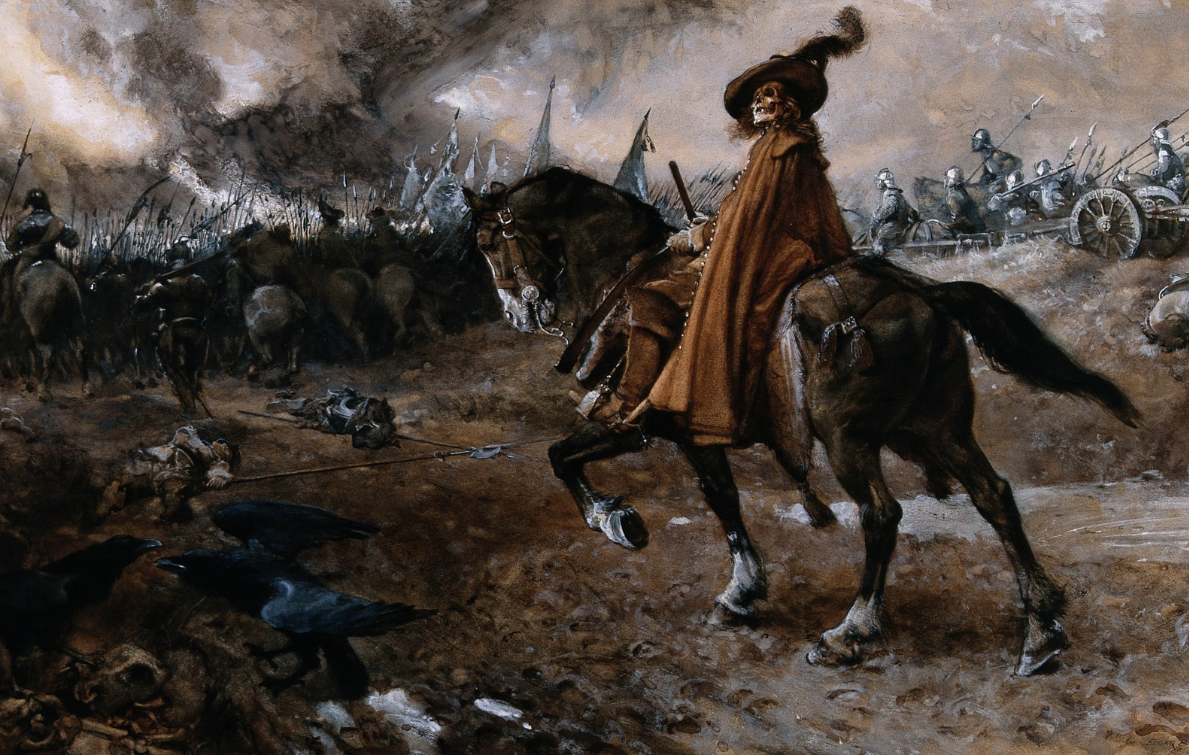
All of us, from time to time, think about death. Whether we admit it to ourselves or not, death is inescapable. Death is the only true constant in this universe, and the act of dying is the only thing we must do.
Fear of death is bound to humanity, and one could argue it is the primal force of nature. A force that we know is inescapable but fear nevertheless.
We are born into a merciless world, we think, feel, grow, and bear children in order to continue the cycle of life. We struggle to survive and watch many of our people die, whether from old age, illnesses, or other reasons.
Life expectancy nearly doubled in the last 150 years due to a series of achievements we made possible. Access to clean water and higher hygiene standards, the eradication of deadly viruses that were the leading cause of infant mortality, and the eradication of equally deadly bacteria with antibiotics. Humanity armed itself with powerful weapons that allowed us to basically live one more life.
Most of the progress concerning life expectancy has occurred in the last 150 years. If we look at the time scale that starts with the first homo sapiens being born and ends with the present time, those 150 years are merely a speck of dust in our ancestors' vast and uncertain lives.
Our ancestors dealt with death on a daily basis. Life was extremely difficult for an average person. From infections and predators to hard, back-breaking work. For those of higher social status, life was a bit easier, but infinitely worse compared to the life of an average person today. Whatever measures our ancestors took couldn't guarantee the survival of their young ones. How lucky we must be that we are here. The true question is whether they thought about death the way we do today. Are we more or less afraid since we don't see death every day? Have we forgotten its essential part in our lives?
Death is unusual. Not all of us fear death nor see it as something inherently evil in nature. Some of us even romanticize death and see a certain beauty in it. Throughout human history, we depicted death in various ways, maybe to cope with its inevitability or to somehow explain something that cannot be explained.
As humans tend to do those things, we stuck to religion for quite a long time. We tried to explain what happens to our loved ones after they die just to make their passing a little more bearable. It is nothing short of magnificent that we connect with and love each other on such a deep level, that we had to be sure there is one more opportunity to see our loved ones once they leave this world.
As more and more people started to distrust religious explanations, we had to turn to other stories to cope with the uncertainty that comes with death. As I usually do, I turn to science for an explanation of why we die. The process of dying can be traced to a cellular level or to a molecular level, to be more specific. Inside our cells, there is a nucleus. That nucleus contains clusters of DNA molecules that make up chromosomes. Chromosomes are usually in the shape of an X, with four arms and a center. The ends of those arms are called telomeres, and those telomeres present the time we have left.
Each cell that contains a nucleus divides at a different speed, and with each division, its telomeres get a little shorter. When telomeres become too short, the cell is no longer able to divide. We can say that the telomeres are like a ticking clock that regulates the whole process of cell division. Just like the gears of the clock become rusty in time, so do our telomeres. We don't know how to fix them. At least, we don't know how to fix them yet.
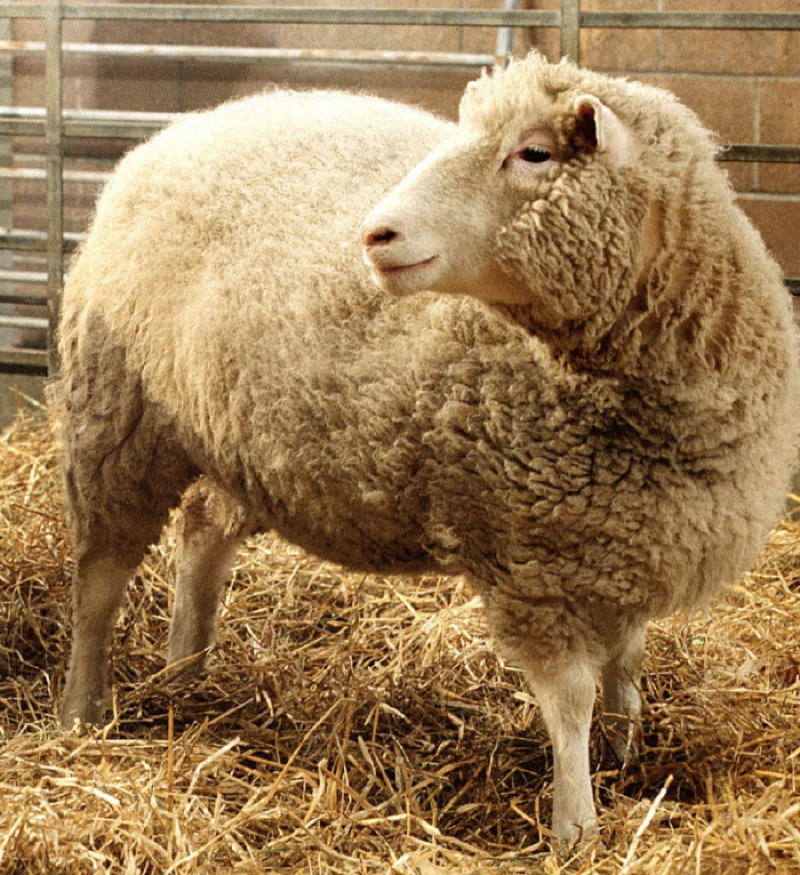
You probably remember the big scientific revelation when scientists managed to clone the first animal- a sheep named Dolly. Before Dolly, there were many attempts to clone animals, and none of them were successful. The main reason for that is the effect telomeres have on the division of cells. After Dolly, it wasn't unusual for other cloned animals to have a significantly shorter life span than other animals of the same species that came to the world through natural reproduction. The reason for that is once again the telomeres that the cloned animal received from its donor. In other words, we were successful in creating the exact copy of an animal, but with the same biological age as its donor.
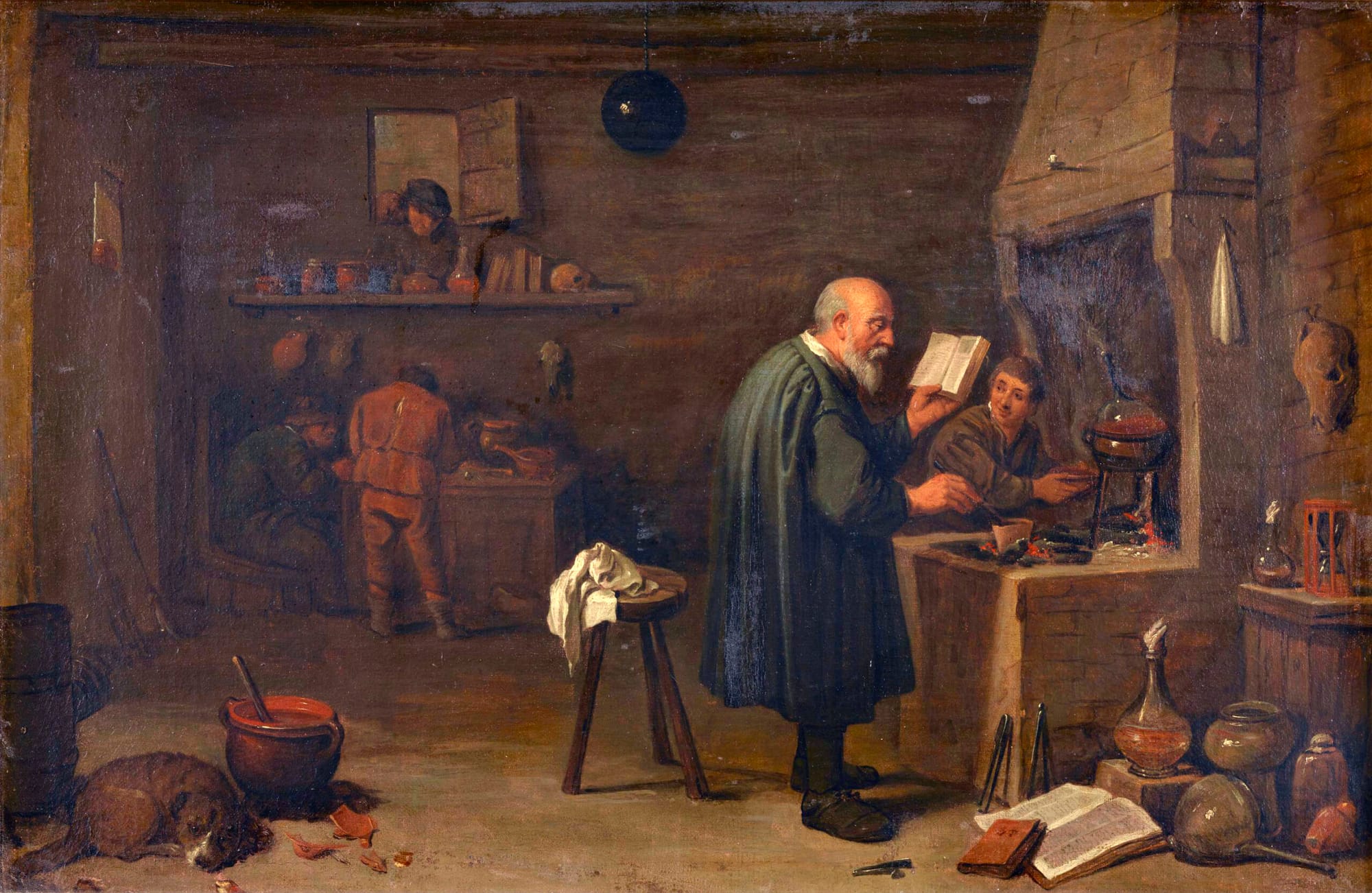
To escape death and to live for all eternity is an ambitious goal that even ancient alchemists dabbled with. Alchemists searched for an elixir of life that could prevent or cure any illness and gift us immortality. We now know that the key to immortality lies in the possibility of lengthening our telomeres and prolonging our lives. But is that even possible?
It is no wonder that many scientists studied this phenomenon. Apart from embryonic stem cells and some forms of germ cells, cancer cells are equipped with a special enzyme called telomerase. This enzyme allows cancer cells to divide indefinitely by lengthening their telomeres with each cell division. Not all cancer cells possess telomerase, but those that do possess it are practically immortal.
Since this discovery, scientists tried to use this enzyme in order to prolong human telomeres. There were many successful experiments, but these weren't enough to divide human cells indefinitely.
One of the first experiments that proved the existence of telomerase in cancer cells was conducted on HeLa cells. HeLa is an immortal cell line used in scientific research. It is the oldest and most commonly used human cell line. The line is named after and derived from cervical cancer cells taken on February 8, 1951, from Henrietta Lacks, a 31-year-old African-American woman.
HeLa cells proved remarkably robust for scientific research and were used as a basis for some of the greatest scientific projects to date. Apart from a large number of cancer studies, they were also used by Jonas Salk to test the first polio vaccine in the 1950s.
They have also been used in testing how parvovirus infects cells, and have been instrumental in the development of human papillomavirus (HPV) vaccines. Even though HeLa cells were taken without Henrietta Lacks's consent, these cells are still used in various laboratories across the world.
It is not illogical to say, or at least to dream, that one day these cell lines will allow us to achieve a major breakthrough in the field of cellular and molecular aging. Maybe Henrietta Lacks will be the reason we find an elixir of life that ancient alchemists so ambitiously sought.
Pay your respect to Henrietta Lacks!
TL;DR:
Death is inevitable and deeply tied to human fear, history, and culture. While modern science has nearly doubled life expectancy in just 150 years, this progress is tiny compared to humanity’s long history of daily struggle with death. As religious explanations faded for some, science stepped in, revealing that aging and death are linked to telomeres, DNA structures that shorten with each cell division. Cancer cells, aided by the enzyme telomerase, can divide indefinitely, making them effectively immortal. Research on immortal HeLa cells derived without consent from Henrietta Lacks has been crucial to major medical breakthroughs and may one day help unlock ways to slow or overcome aging. Henrietta Lacks’s legacy may play a key role in humanity’s enduring quest for immortality.